

Summary
Matisse Neutered is a complete and balanced dry food designed to support the nutritional needs of sterilized adult cats.
The recipe features 32% dehydrated chicken meat as the primary ingredient, providing high-quality protein for maintaining lean muscle mass.
It includes 25% rice and 8% pea fiber, offering digestible carbohydrates and dietary fiber to promote healthy digestion and weight control.
With a crude protein content of 31% and a moderate fat level of 11%, it is optimized for the metabolic needs of neutered cats.
Enriched with taurine (1,800 mg/kg) and L-carnitine (250 mg/kg), it supports cardiovascular health, vision, and efficient fat metabolism.
Fish oil contains omega-3 and omega-6 fatty acids, which contribute to skin health and a glossy coat and enhance overall wellness.
Natural antioxidants and microcrystalline cellulose ensure product freshness and improved digestive performance.
Pros:
- High-quality protein: 32% dehydrated chicken ensures a rich source of essential amino acids.
- Weight management: Moderate fat content and L-carnitine help prevent weight gain in sterilized cats.
- Digestive support: Pea fiber, psyllium, and beet pulp promote healthy digestion and aid in hairball control.
- Heart and vision health: Enriched with taurine and omega fatty acids for vital organ support.
- Natural preservatives: Free from artificial additives, using natural antioxidants to maintain quality.
Cons:
- Moderate protein level: At 31%, it may not meet the higher protein demands of more active cats.
- Cereal inclusion: With 25% rice and corn, the carbohydrate content may not align with a carnivore-focused diet.
- High fiber content: The fiber level of 5.9% may not be suitable for cats with specific sensitivities.
Nutrition
Ingredients
- Dehydrated Chicken Meat 32%
- Rice 25%
- Corn
- Corn gluten
- Fiber vegetable of peas 8%
- Dehydrated fish
- Chicken fat
- Dried beetroot pulp 6%
- Hydrolyzed animal proteins
- Fish oil
- and also:
Vitamins and Additives
- Vitamin A 16000 IU
- Vitamin B1 4.8 mg/kg
- Vitamin B2 8 mg/kg
- Vitamin B6 6.4 mg/kg
- Vitamin B12 0.06 mg/kg
- Vitamin C 160 mg/kg
- Vitamin D3 1600 IU
- Vitamin E 160 mg/kg
- and also:
Guaranteed Analysis
Comments
Guaranteed Analysis
View the product change history.
Sellers’ Offers
Select Package size to view offers
More products from Matisse
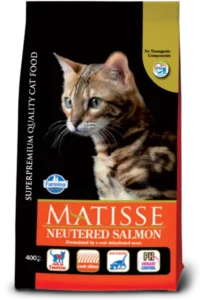
Neutered Salmon
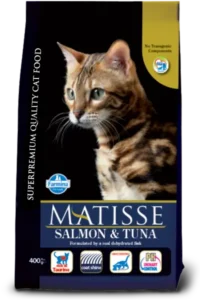
Salmon & Tuna
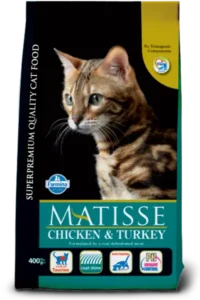
Chicken & Turkey
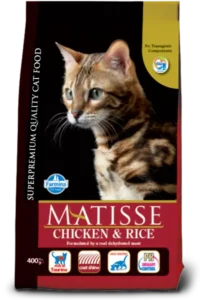
Chicken & Rice

Kitten 1-12 Months
Alternative Products
We compare key factors such as overall score, life stage, and category, along with core nutritional values like protein, fat, fiber, and metabolizable energy.
While not identical, these products fall within a defined range to offer nutritionally comparable options.
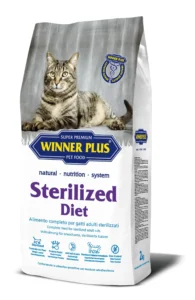
Sterilized Diet
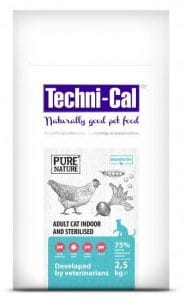
Pure Nature Cat Indoor & Sterilised

Sterilized
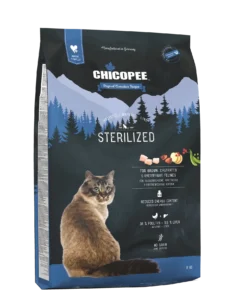
HNL Adult Sterilised
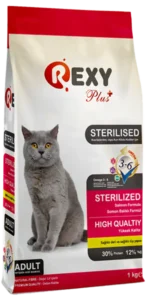
Sterilized Salmon
Why this score?
- 40.1% carbohydrates of combination RC-31
- Low protein content-16
- Gluten at 3rd place after meat-3
- Additional source of animal protein (fish meal) at 6th place1
- Dehydrated chicken at 1st place4

Found a mistake?
Missing info?
Provide as many details as possible about Matisse: Neutered so we can make it better!
Thank you!
How the score is calculated?
The actual calculation of the score is based on sophisticated and advanced algorithm that takes into account multiple parameters.
To simplify the explanation, the calculation is based on three main criteria:
(1) Amount of protein (more is better)
(2) Amount of carbohydrates (less is better)
(3) Quality and source of ingredients.
Based on that 3 main criteria, 9 score calculation rules are used to compare the different foods.
One major assumption is that the closer an ingredient is to the top of the ingredient list, the greater its relative weight and contribution to the food.
In general, cat food is composed of protein, fats, carbohydrates, fibers, vitamins, and minerals.
Protein is the most important component in a cat's diet, and cats primarily get their protein from animal meat.
Fat is a primary source of energy and essential fatty acids.
Carbohydrates are controversial in a cat's diet, as cats are obligate carnivores and typically consume very few carbohydrates.
Fibers play an important role in digestion and food absorption, and vitamins and minerals are essential for different organism functions.
Dry matter values are used to compare the amount of nutrients in different cat foods. This means that moisture is excluded from the equation to provide a more accurate comparison.
Putting all of these and more into a formula results in a product score.
The maximum score a cat food can receive is 100. Points are added or removed based on the score calculation rules.
Didn't find a dry food?
Provide as many details as you can so we can analyze the missing product and add it.
Invalid form ID
KIBBLE COLOR DISCLAIMER
Sometimes, the external appearance of the food may change in the different production batches since we only use natural ingredients, sometimes there may be variability in their color that is reflected also in the kibbles.
Same animal species could have different meat colors, darker or lighter, and this is reflected in the kibbles color.
Farmina does not use any artificial color to uniform different batches.
Therefore, the occurrence of different shades of color in the kibbles is normal and does not affect the quality of the food, or its nutritional characteristics.
For any further clarification don't hesitate and get in touch with your Genius Consultant.
KIBBLE SIZE
All the kibbles have a range for size, to ensure a correct fragmentation of the food.
Although it is a rare occurrence, sometimes minimal variations inside the same bag are possible.
As far as the kibbles are within the control range, everything is normal and as it should be.
If you notice some kibbles out of the below ranges, please get in touch with your Genius Consultant because you could be eligible for the 100% Guarantee policy.
KIBBLES SIZES:
STARTER: Diameter 5-7 mm - Thickness: 4-5 mm
PUPPY MINI: Diameter 8-10 mm - Thickness 4-6 mm
PUPPY MEDIUM-MAXI: Diameter 12-14 mm - Thickness 5-7 mm
ADULT MINI: Diameter 8-10 mm - Thickness 4-6 mm
ADULT MEDIUM-MAXI: Diameter 14-17 mm - Thickness 8-10 mm
ADULT MAXI-GIANT: Diameter 19-21 mm - Thickness 11-13 mm
QUINOA MINI: Diameter 8-10 mm - Thickness 4-6 mm
QUINOA MEDIUM-MAXI & UNIVERSAL KIBBLE: Diameter 15-17 mm - Thickness 8-10 mm
KITTEN: Diameter 5-7 mm - Thickness: 4-5 mm
FELINE ADULT: Diameter 8-10 mm - Thickness 3.5-5.5 mm